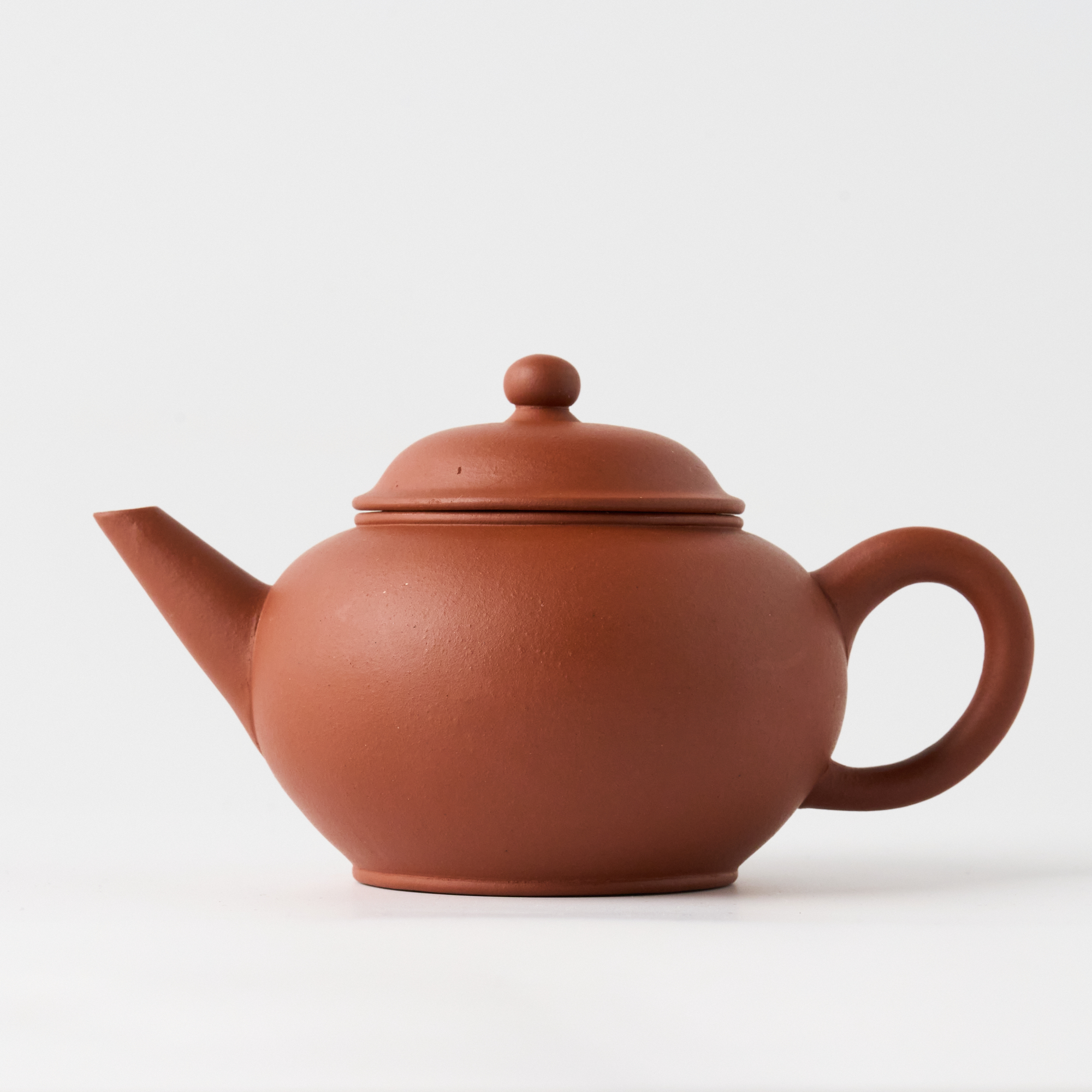
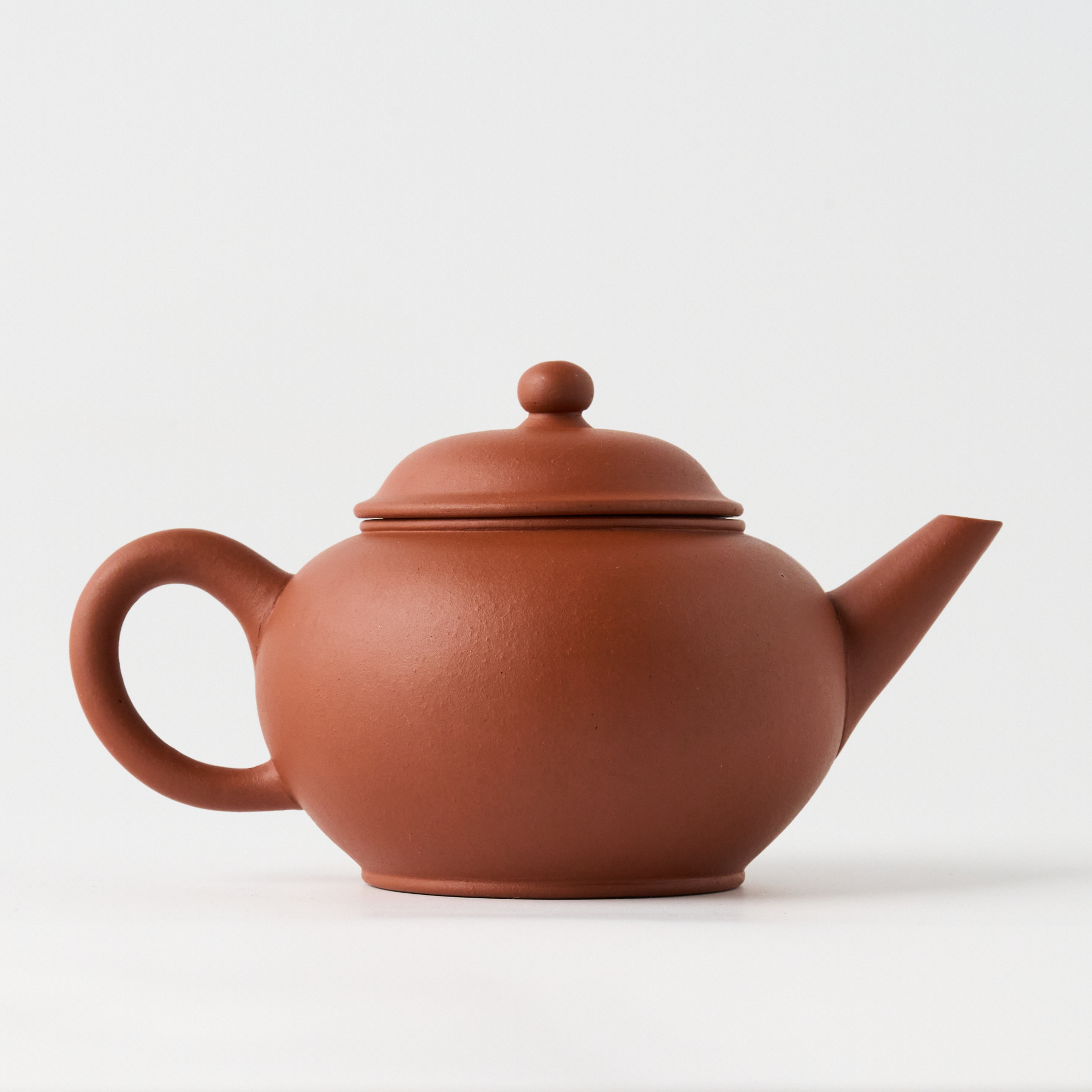
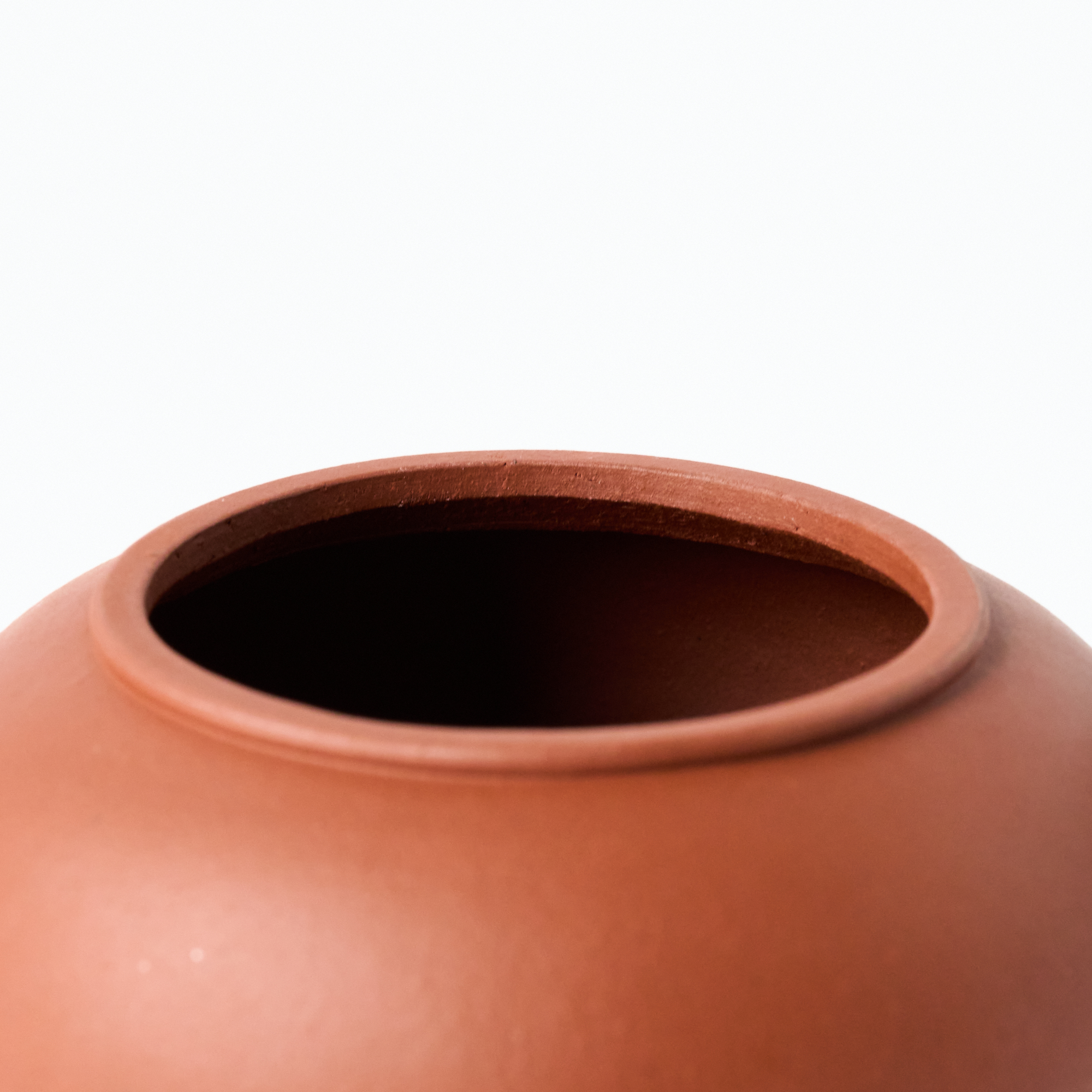
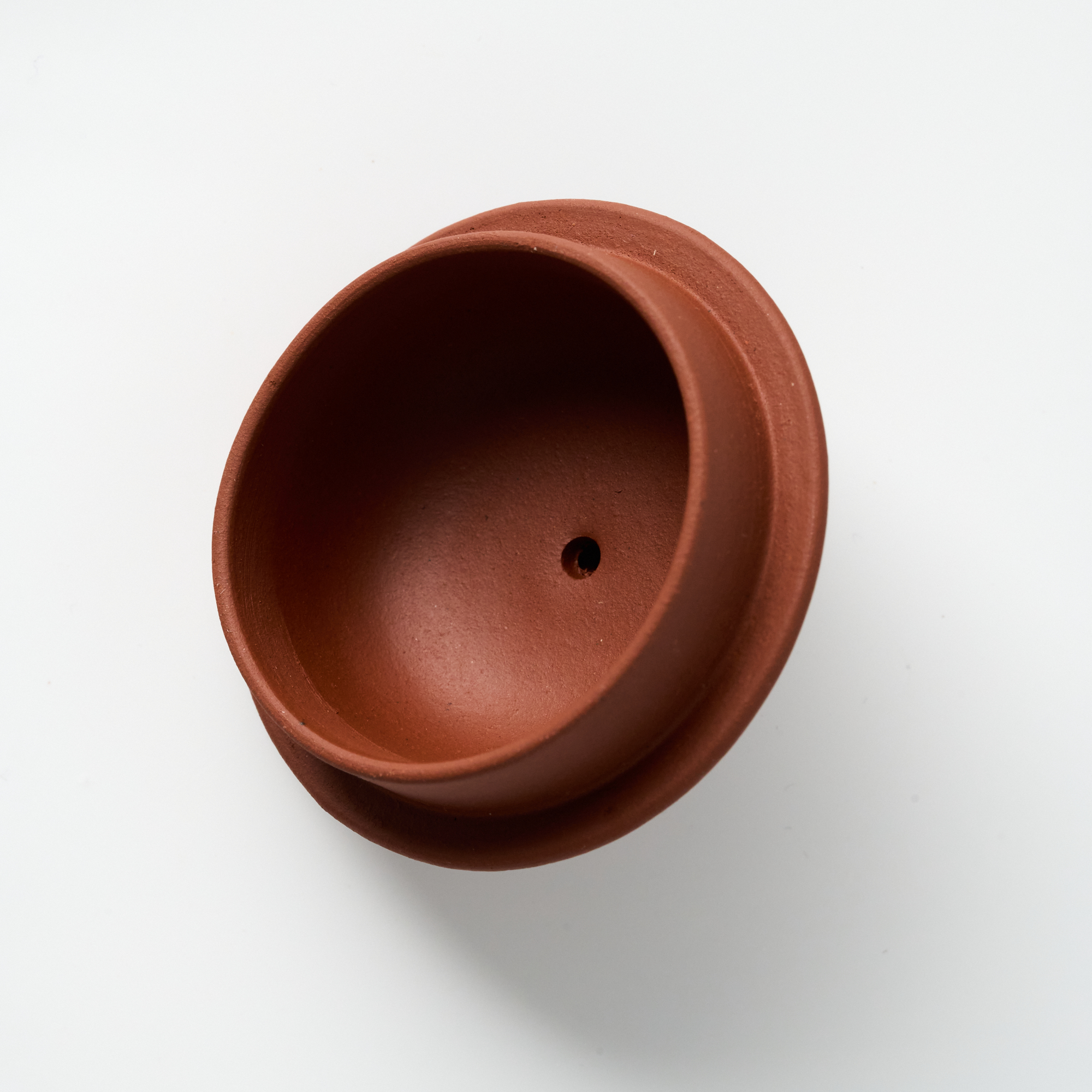
Teapot Vintage Shui Ping, 150ml, Hong Ni, F1, 70s
39 640.00 UAH
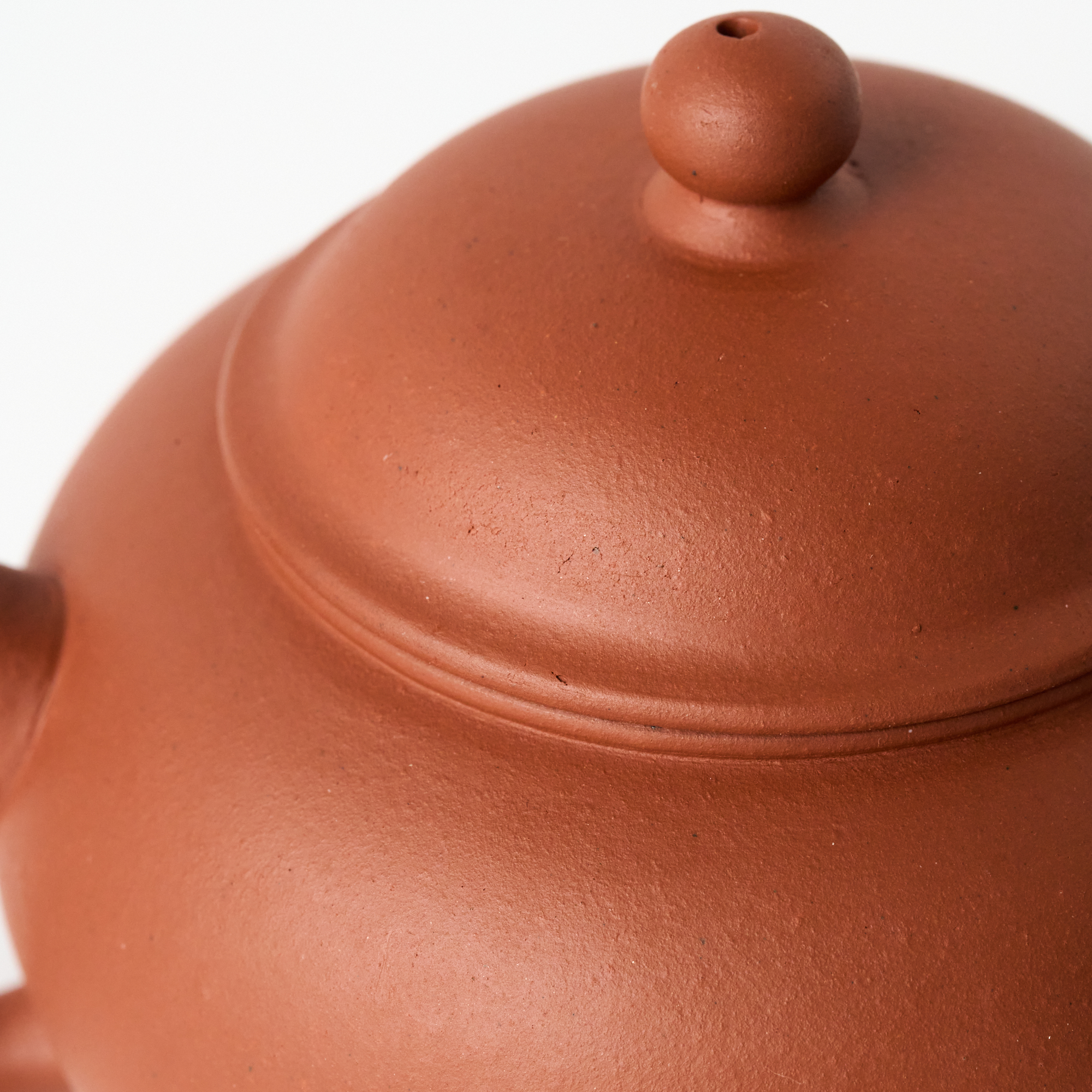
A “canonical” teapot made in the 1970s, during the second half of the “early period” of the 1st Yixing Factory’s operation. At that time, the best Yixing clay available was used. The use of this clay was one of the main factors that defined the “early period” (1958–1977) as a distinct era and set it apart from the later stages of the factory’s work.
At that time, the red Yixing clay (Hong Ni) was mined from the Zhao Zhuang deposit and was completely depleted by 1977. This clay is considered the benchmark—the best for brewing tea. It allows you to extract the maximum from the tea, revealing all its strengths and weaknesses. The only competitor to it might be the Yixing Lao Zhu Ni clay, which ran out even earlier, at the beginning of the 20th century.
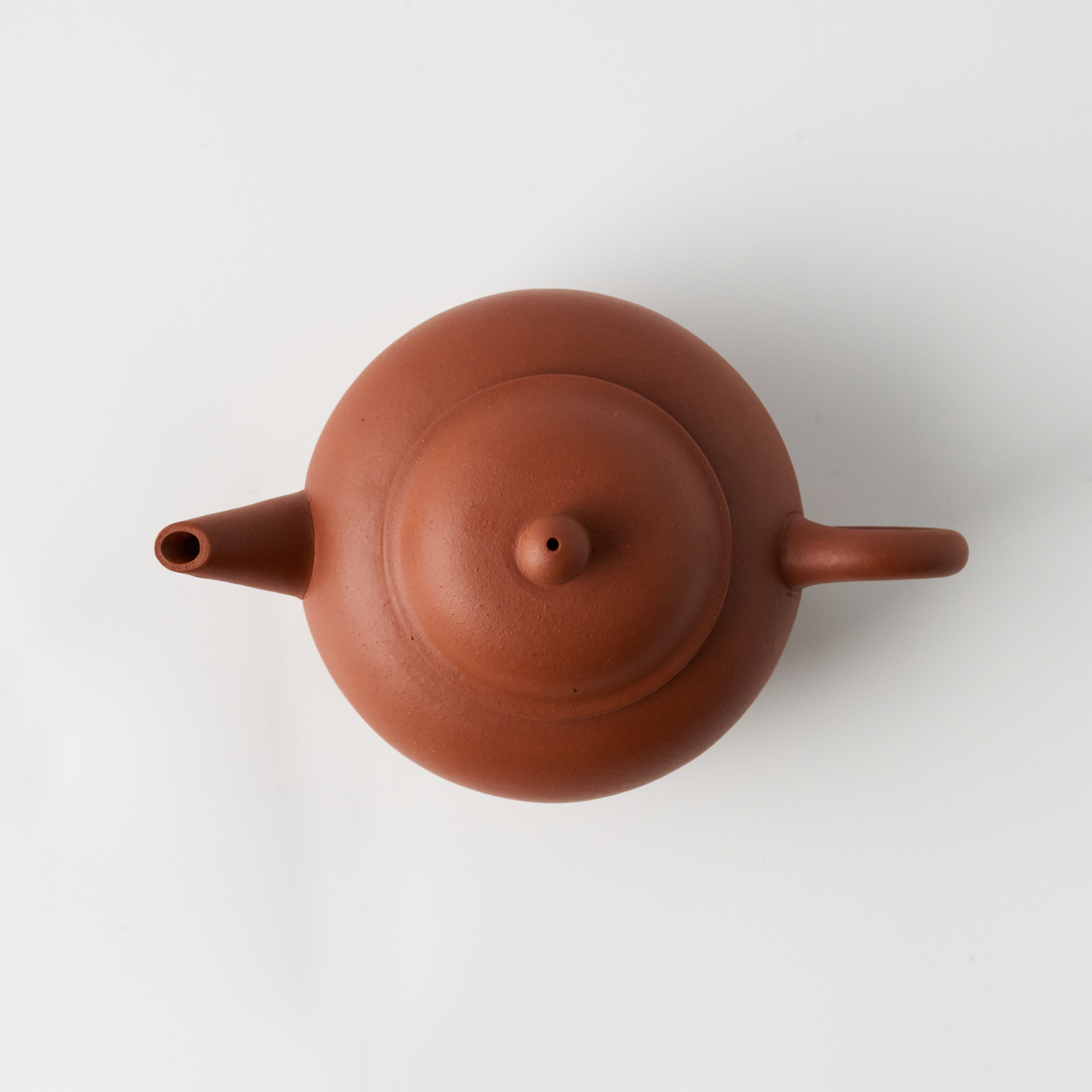
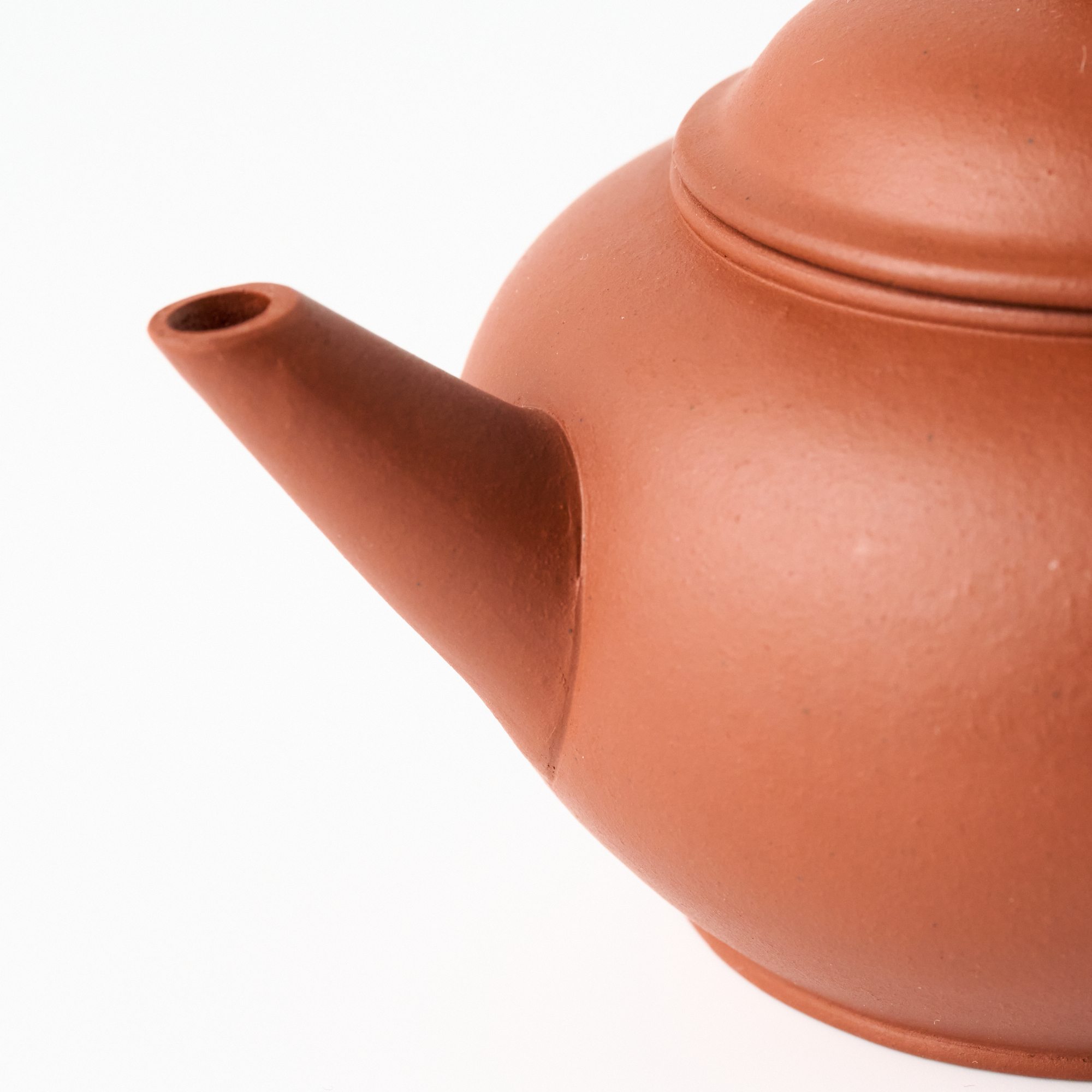
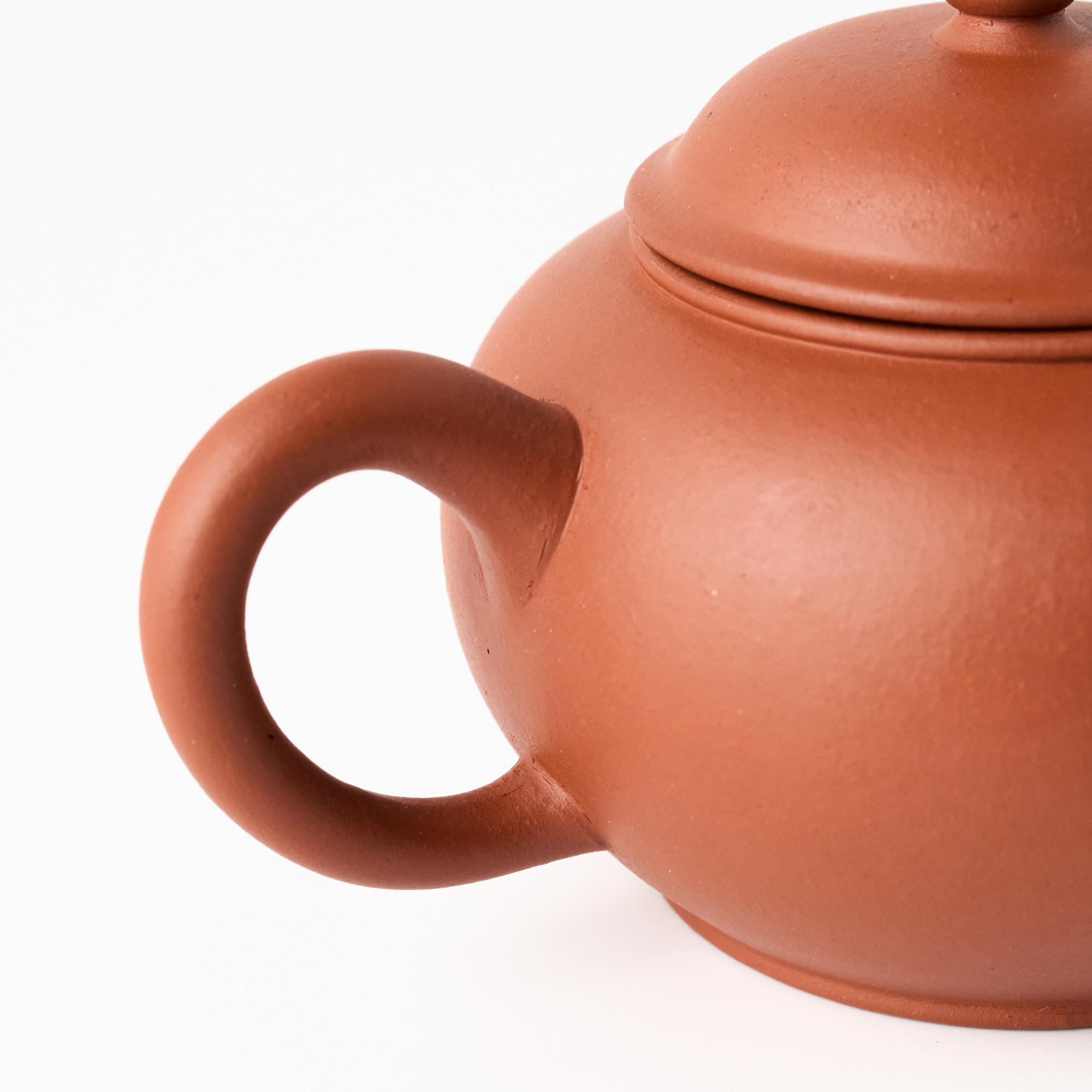
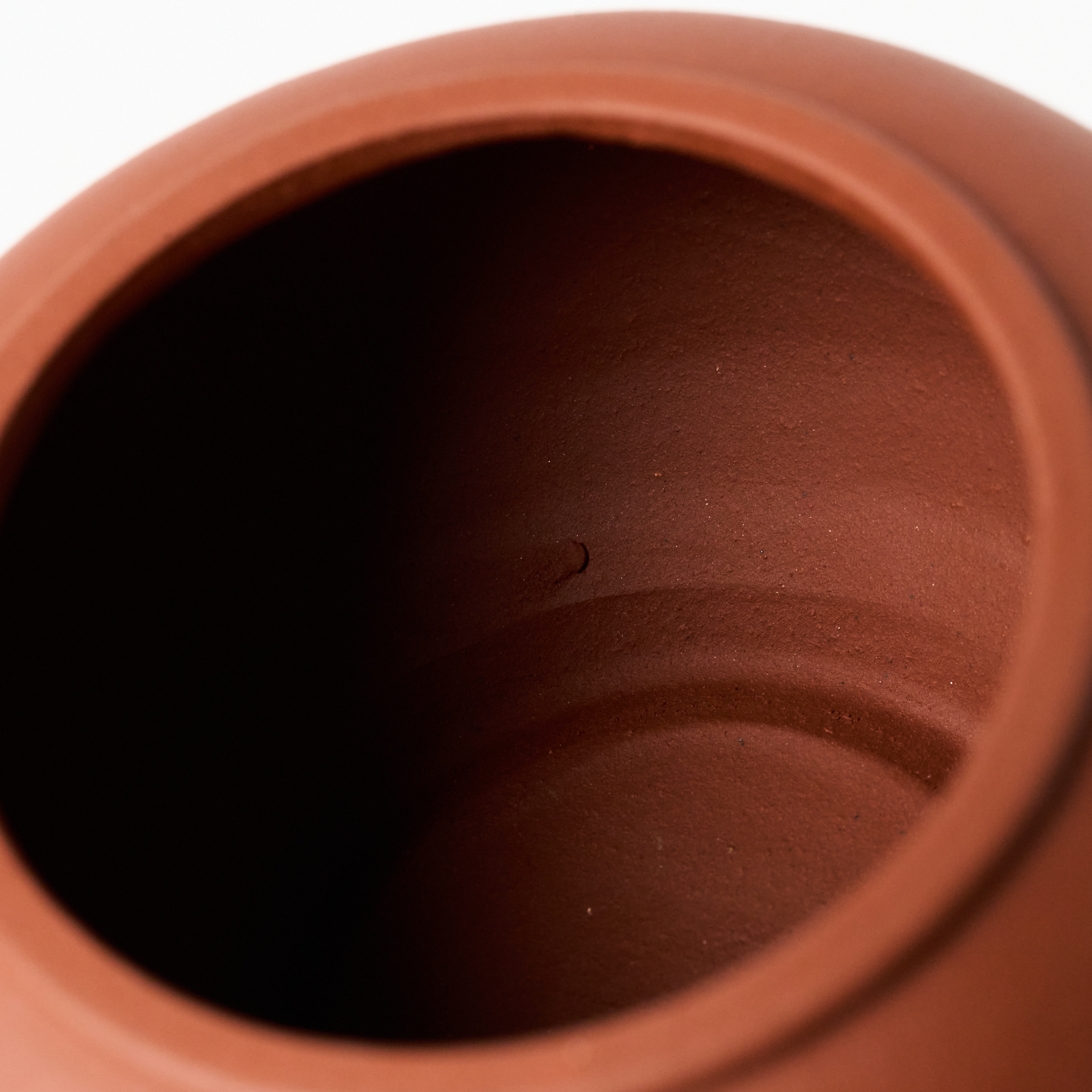
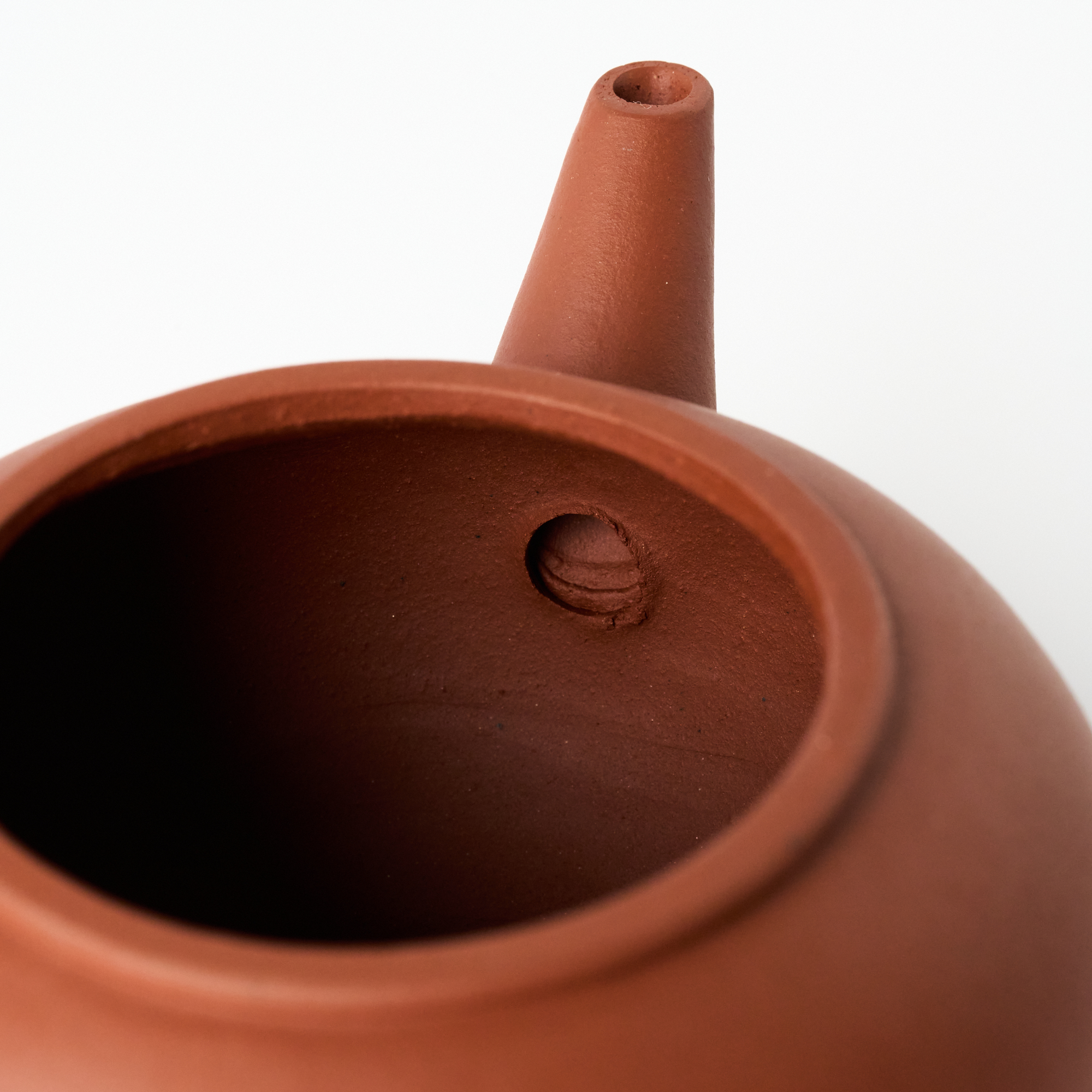
After the closure of the Zhao Zhuangi deposit, the factory switched to red clay from other Yixing deposits, which differed in composition and was significantly lower in quality. Starting from the 1980s, iron oxide was added to the clay mixture to enhance color, along with plasticizers/preservatives to shorten the preparation time of the clay for use. This is because the clay extracted from the mine must “rest” for several years to gain plasticity, without which firing the products would cause cracks and deformations. This teapot was made in the 1970s, during the second half of the factory’s “early period.” At that time, the clay was purified somewhat less thoroughly than in the 1960s, so the teapot shows more small black spots. These are natural inclusions of tiny particles of iron oxide ore that appear during firing. However, all experts agree that this has no effect on the quality of brewing.
Overall, throughout its entire existence, the 1st Yixing Factory gradually moved towards increasing production volumes, which significantly affected the quality of its products. From the very beginning, the craftsmen used a semi-handmade production method, where special templates and molds facilitated and accelerated the work. This method is still used by the majority of workshops in Yixing today. In the 1950s and 60s, the craftsmen paid more attention to the products, refining the teapot’s shape by hand to meet the set standard. Traces of such manual finishing are clearly visible on early teapots, which look more refined than those from later periods. In the 1970s, the craftsmen put in slightly less effort than before, so the teapots from this period differ subtly from the earlier ones, with slightly rougher lines. The difference is actually subtle and can only be noticed by those with certain experience.
This teapot is of the “Shui Ping” standard shape, which the chief master and founder of the factory, Gu Jingzhou, chose as the base, making it the most popular shape for decades. The teapot has a volume of 150 ml, which corresponds to “12 cups” in the Chinese classification or “8 cups” in the Taiwanese classification. It is the largest size among the standard ones. Larger teapots were made in smaller quantities and have been less well preserved to this day, so they are usually more expensive than smaller teapots.
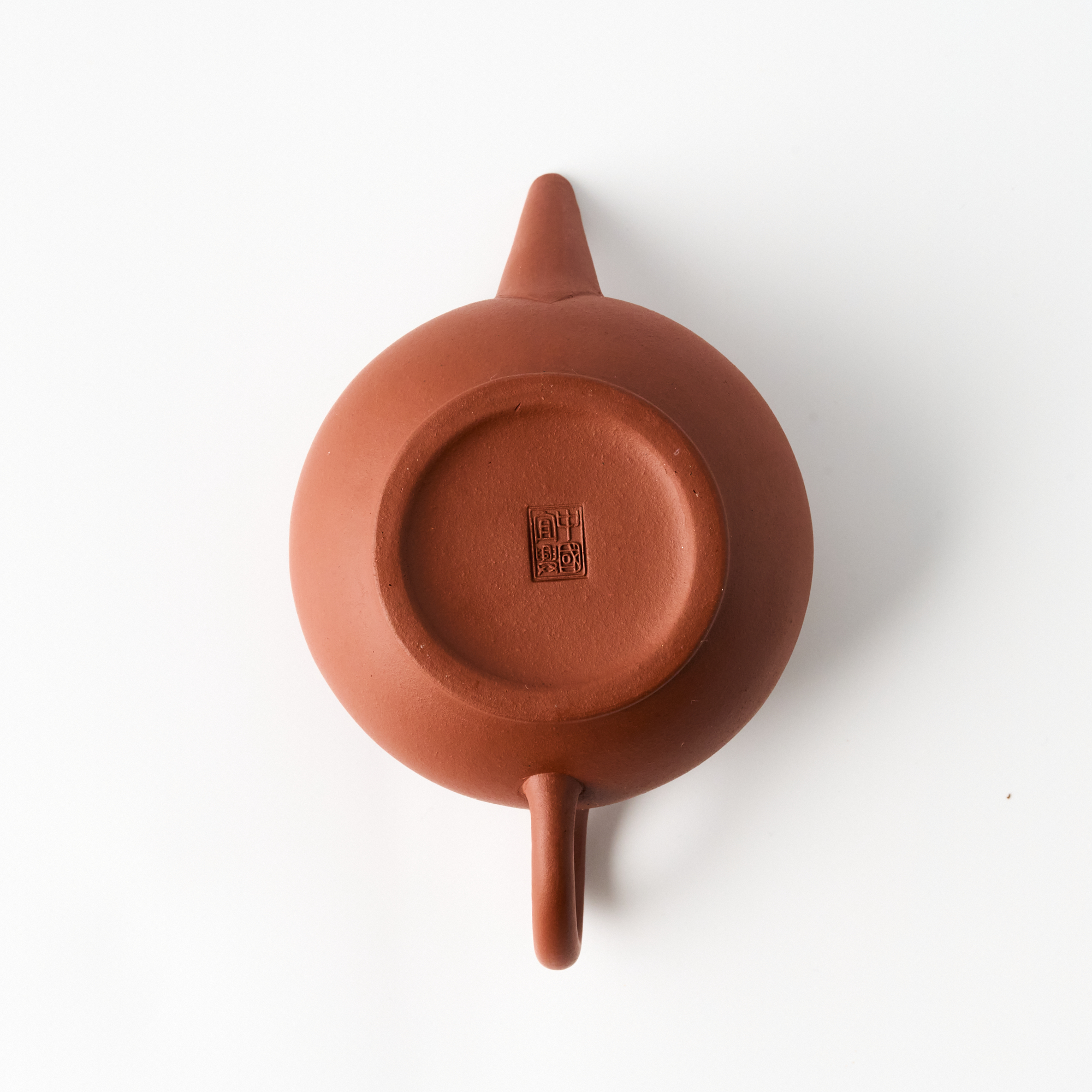
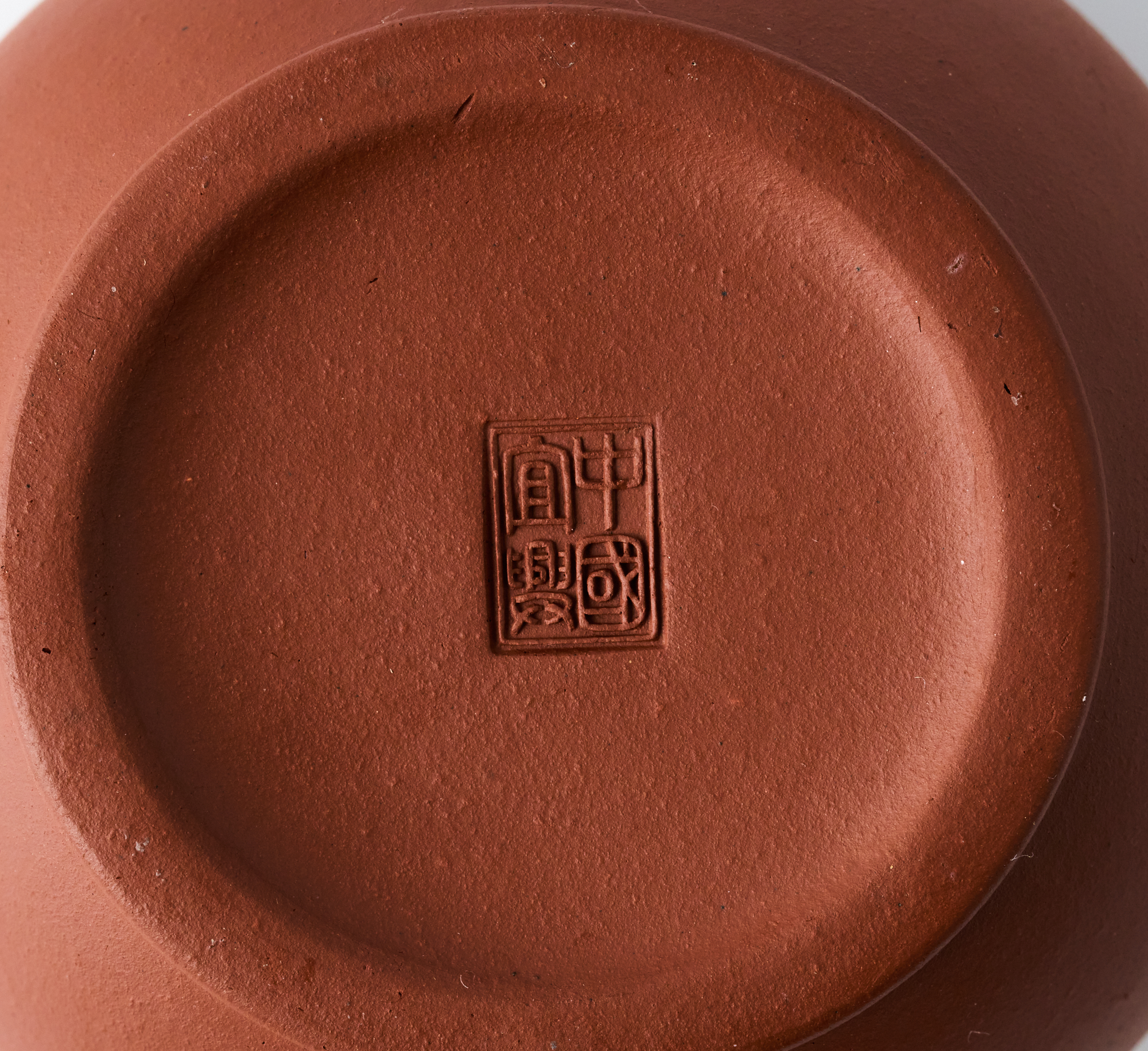
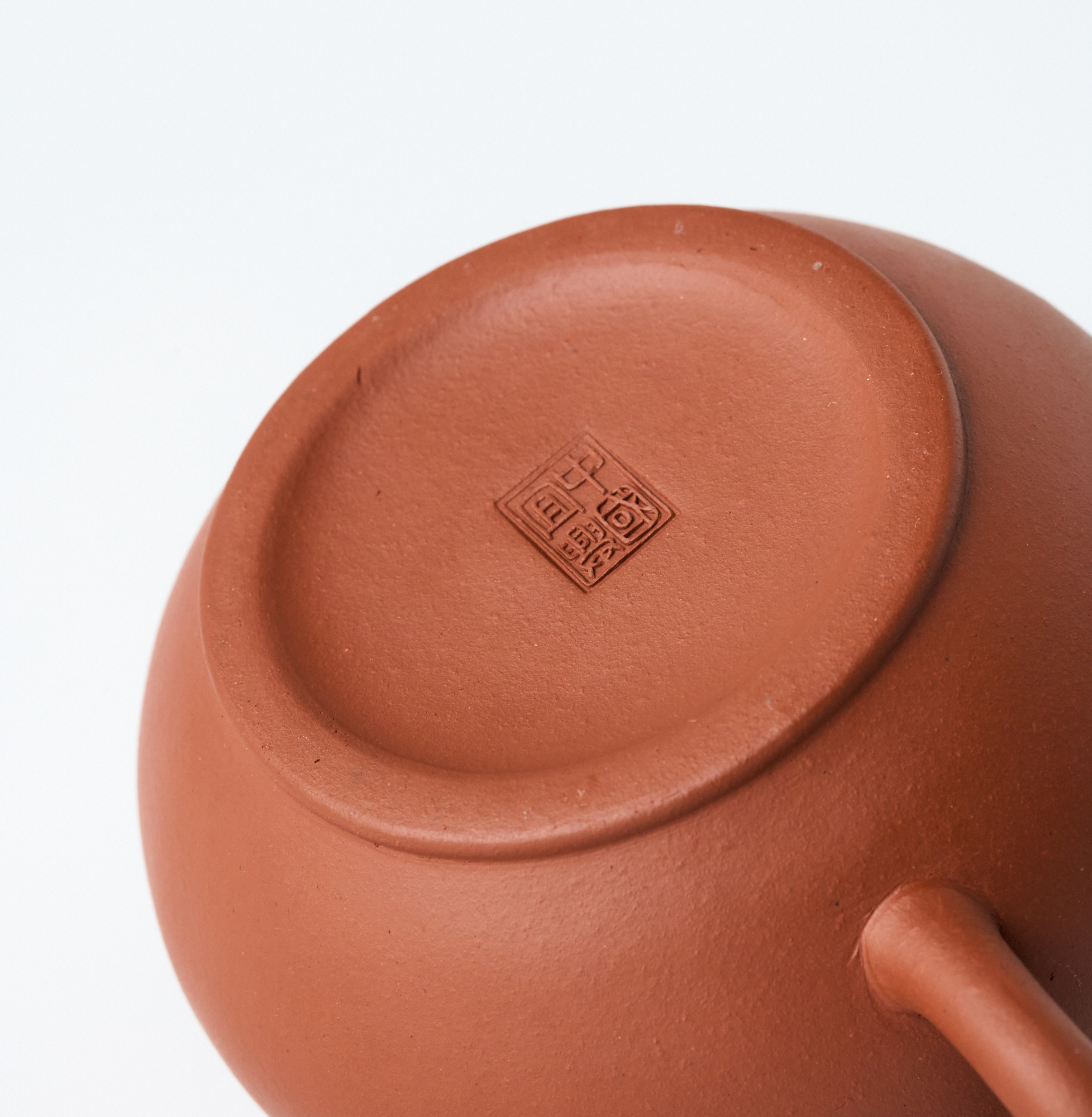
On the bottom of the teapot is a four-character seal reading “中國宜興 / Zhong Guo Yixing” 6:4, which is typical for teapots from the 1970s.
This teapot can not only become a true “star” of your collection but also an ideal tool for unlocking the essence of tea, an indispensable companion on your journey through the “tea universe.”
Out of stock
Master
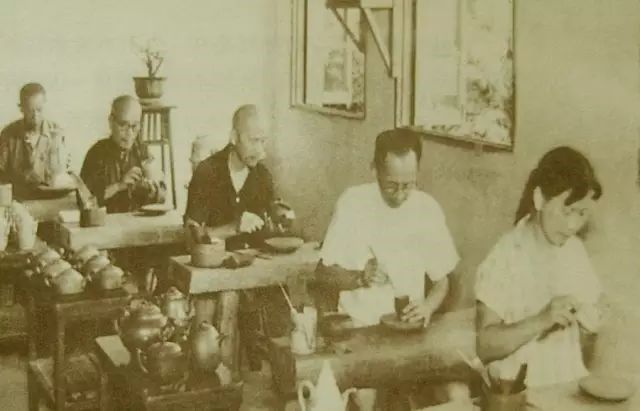
First Yixing Factory (1958-1997).
The state-owned factory was the sole producer of Yixing teapots from its founding until the early 1980s. During this time, the factory used the finest Yixing clay available. Skilled artisans worked there, crafting teapots by hand and semi-hand methods. Products from this factory, especially those from the early period (1958–1977), are considered “canonical” among true connoisseurs of Gongfu tea brewing.
You may also get tea high with:
-
Coaster with silver trim v85/3
4 200.00 UAHGIFT GUIDETeaware and AccessoriesVintage TeawareVintage tea plate V4/6
5 200.00 UAHTeaware and AccessoriesVintage Teaware