Additional information
| Weight | N/A |
|---|---|
| Size | 25g, 50g, 100g, 200g |
| Майстер (виробник) | |
| Район походження | |
| Вік сировини | |
| Регіон походження | |
| Country of origin | |
| Рік врожаю | |
| Техніка обробки |

From 315.00 UAH

| Weight | N/A |
|---|---|
| Size | 25g, 50g, 100g, 200g |
| Майстер (виробник) | |
| Район походження | |
| Вік сировини | |
| Регіон походження | |
| Country of origin | |
| Рік врожаю | |
| Техніка обробки |
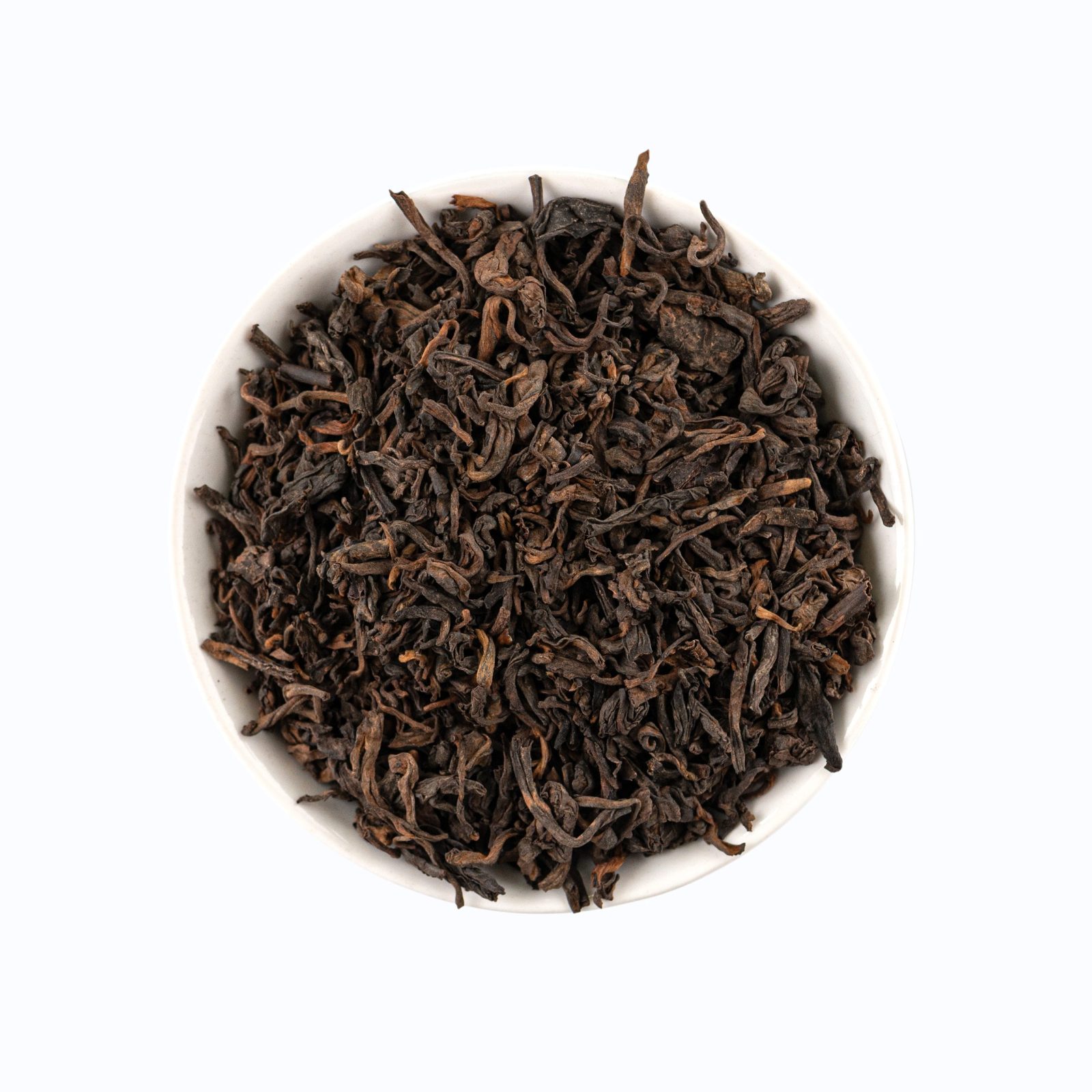
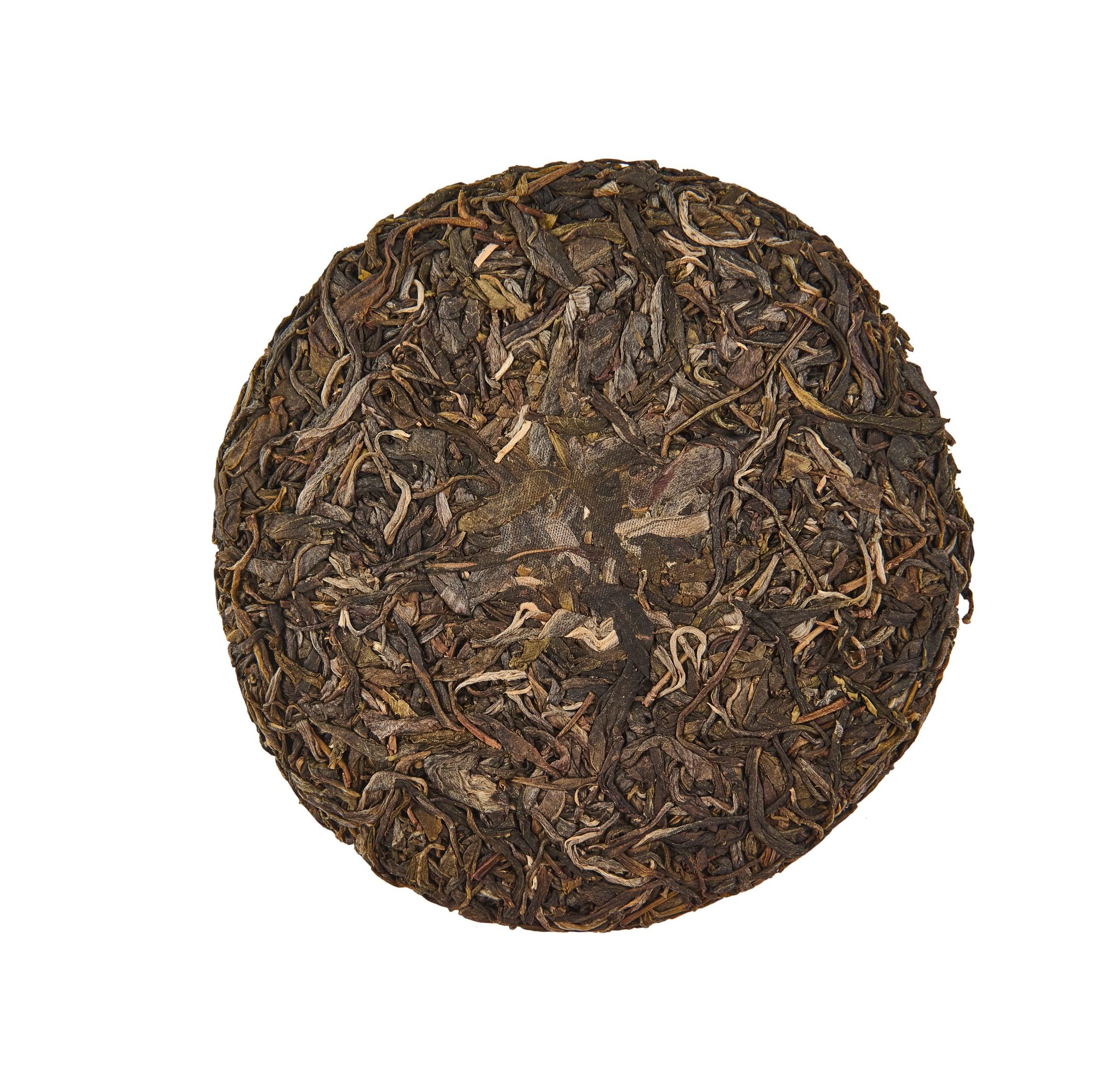
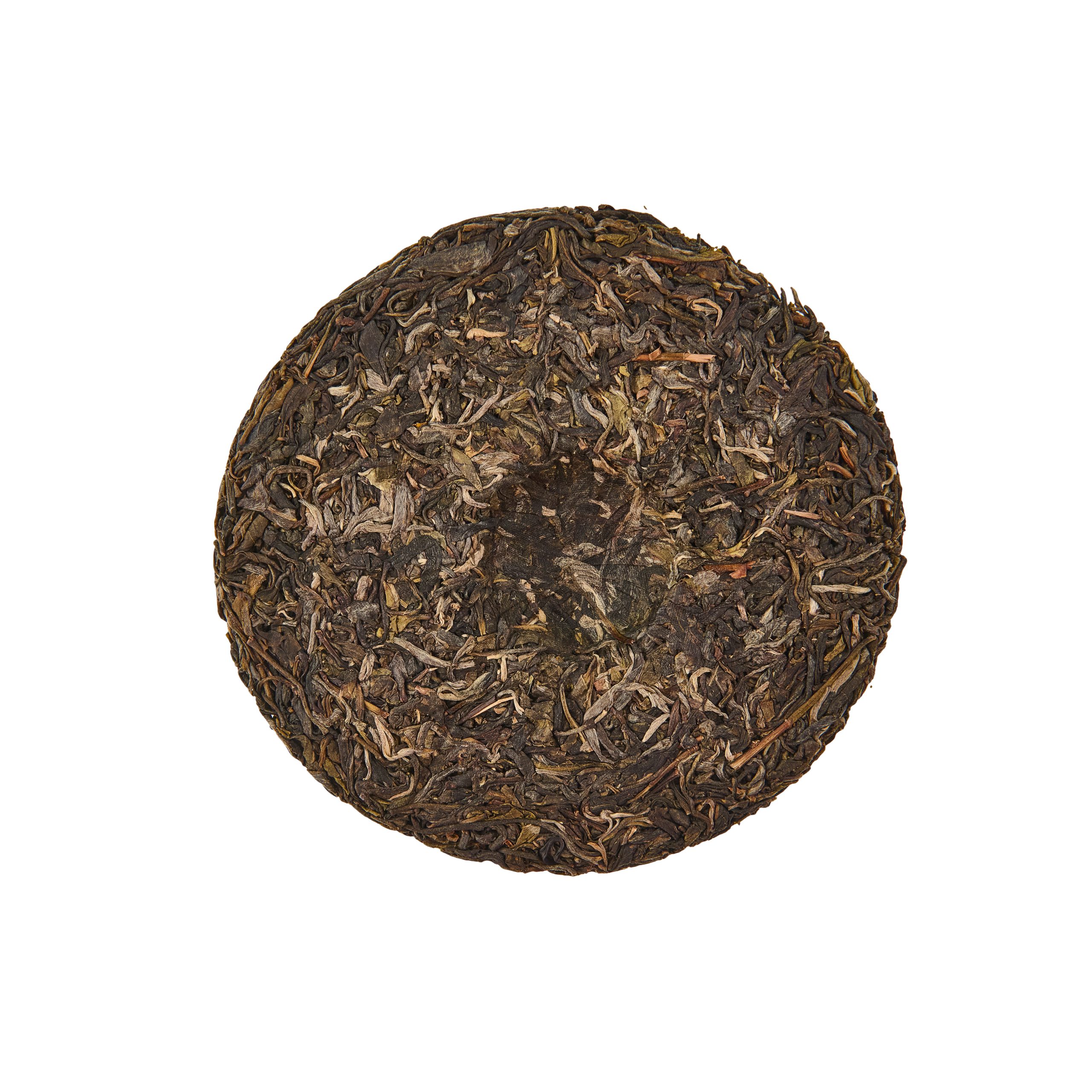
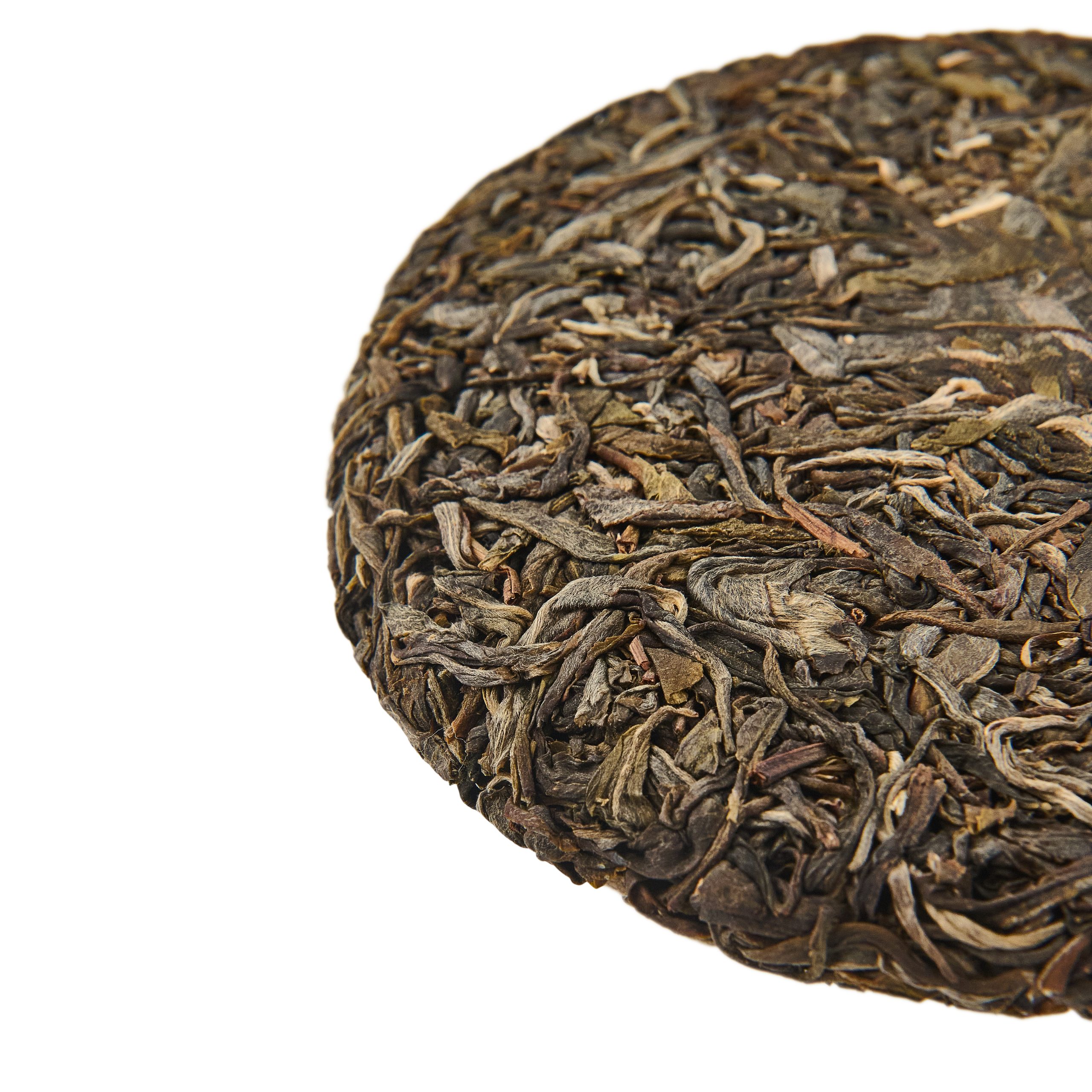
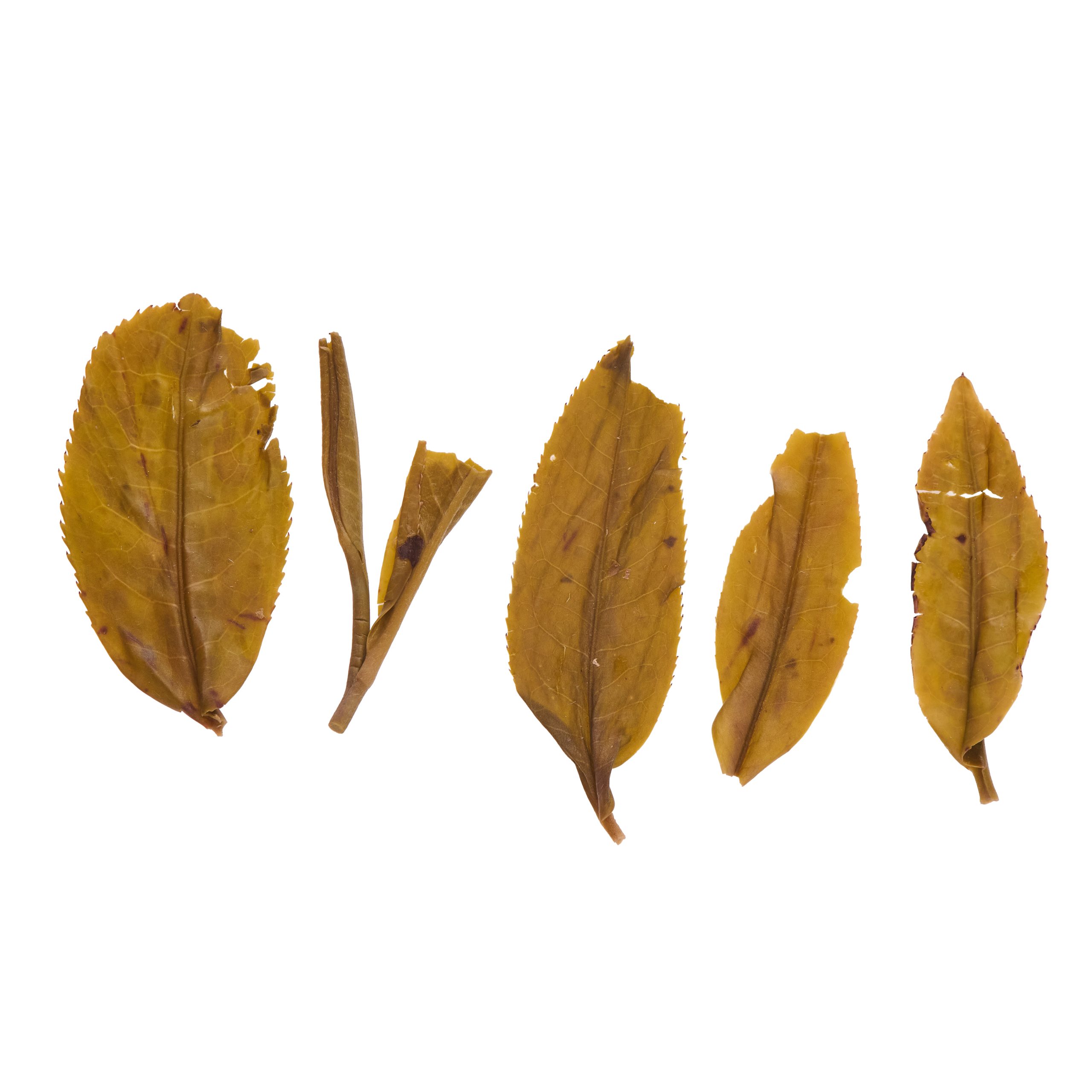
The tea material for this sheng puer was harvested from 100–120-year-old trees in a garden located on the banks of the Honghe River in Ailao, at the border with the Wuliang Mountains, beside a mulberry grove. The leaves are medium-small in size with dark pigmentation, a distinctive characteristic of the local varietal.
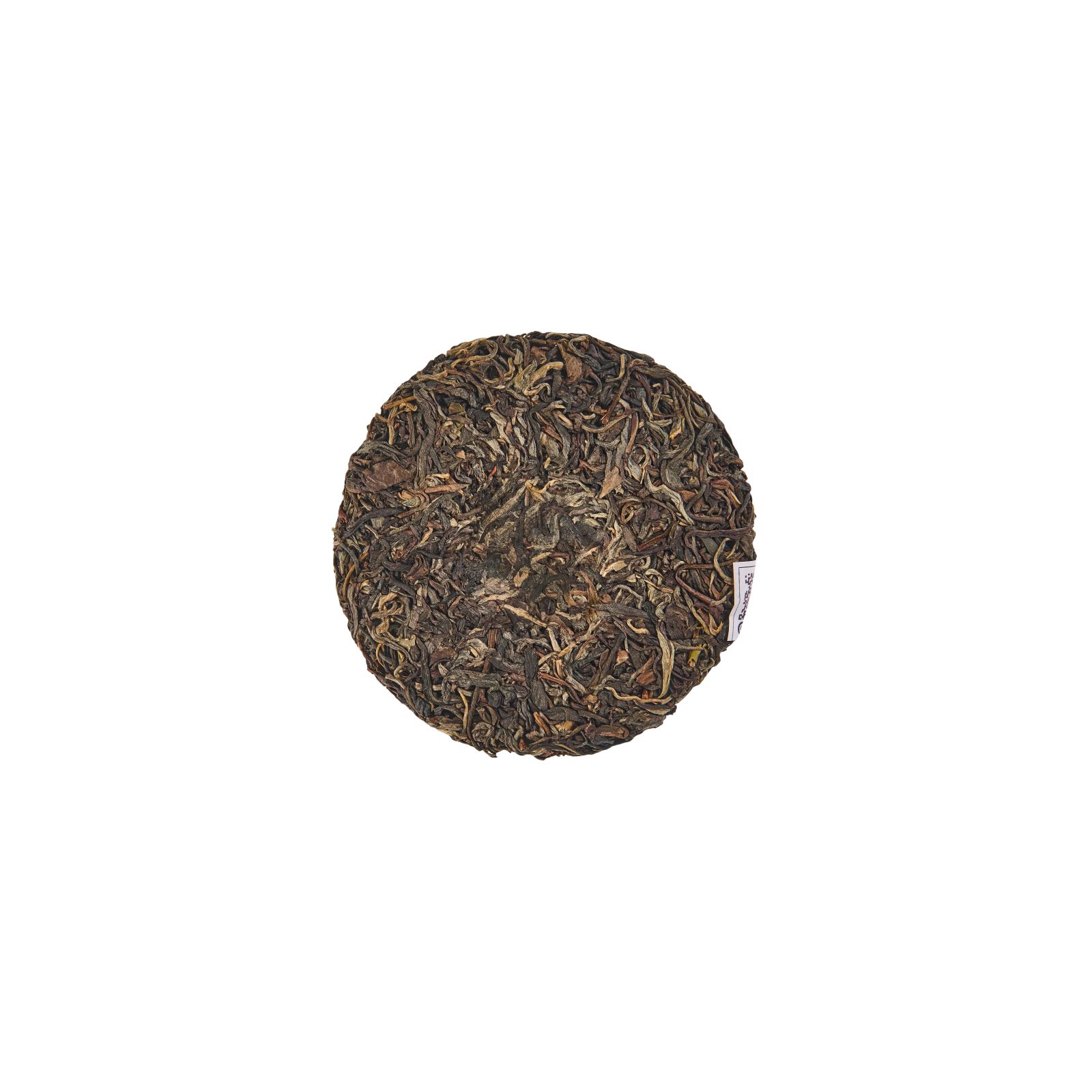
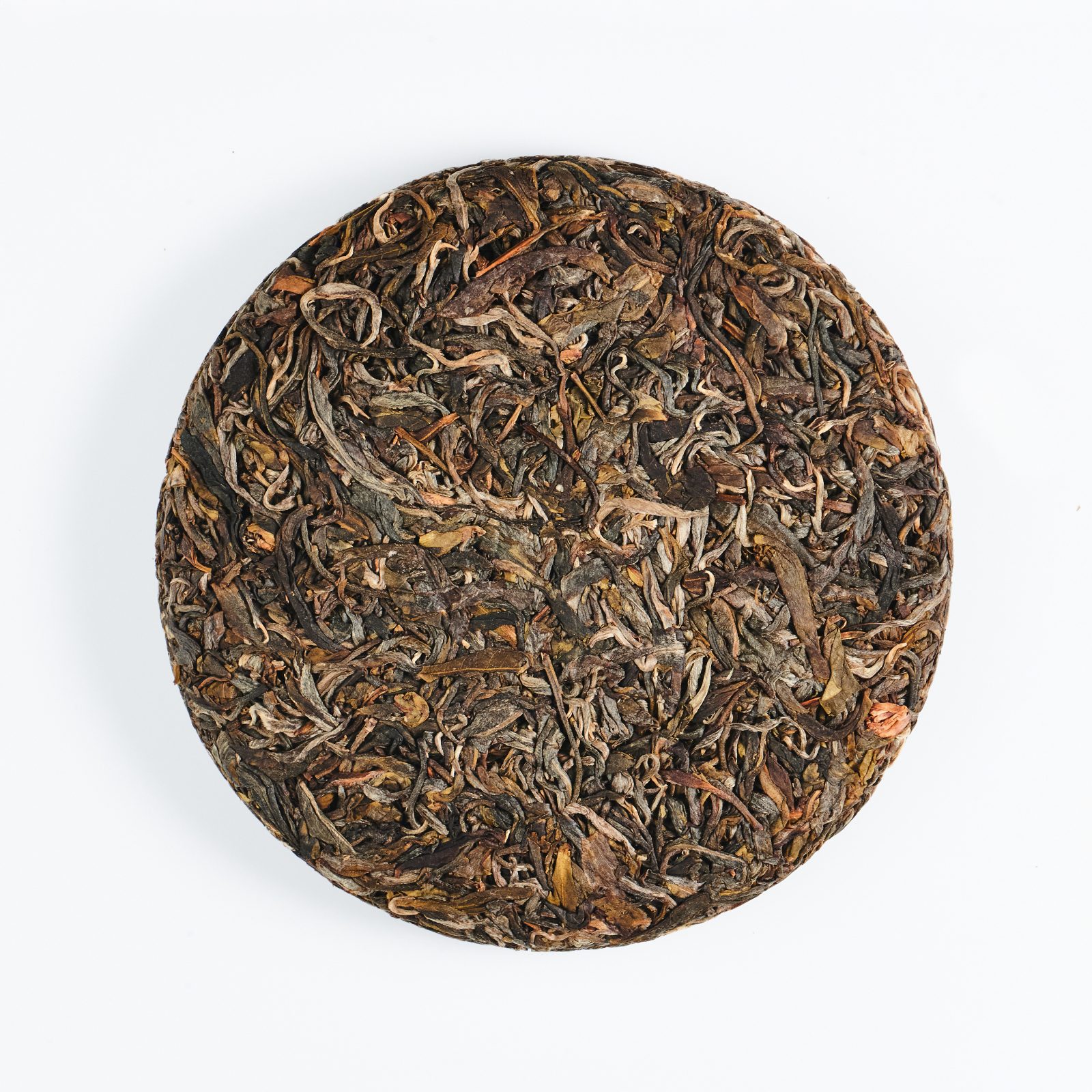
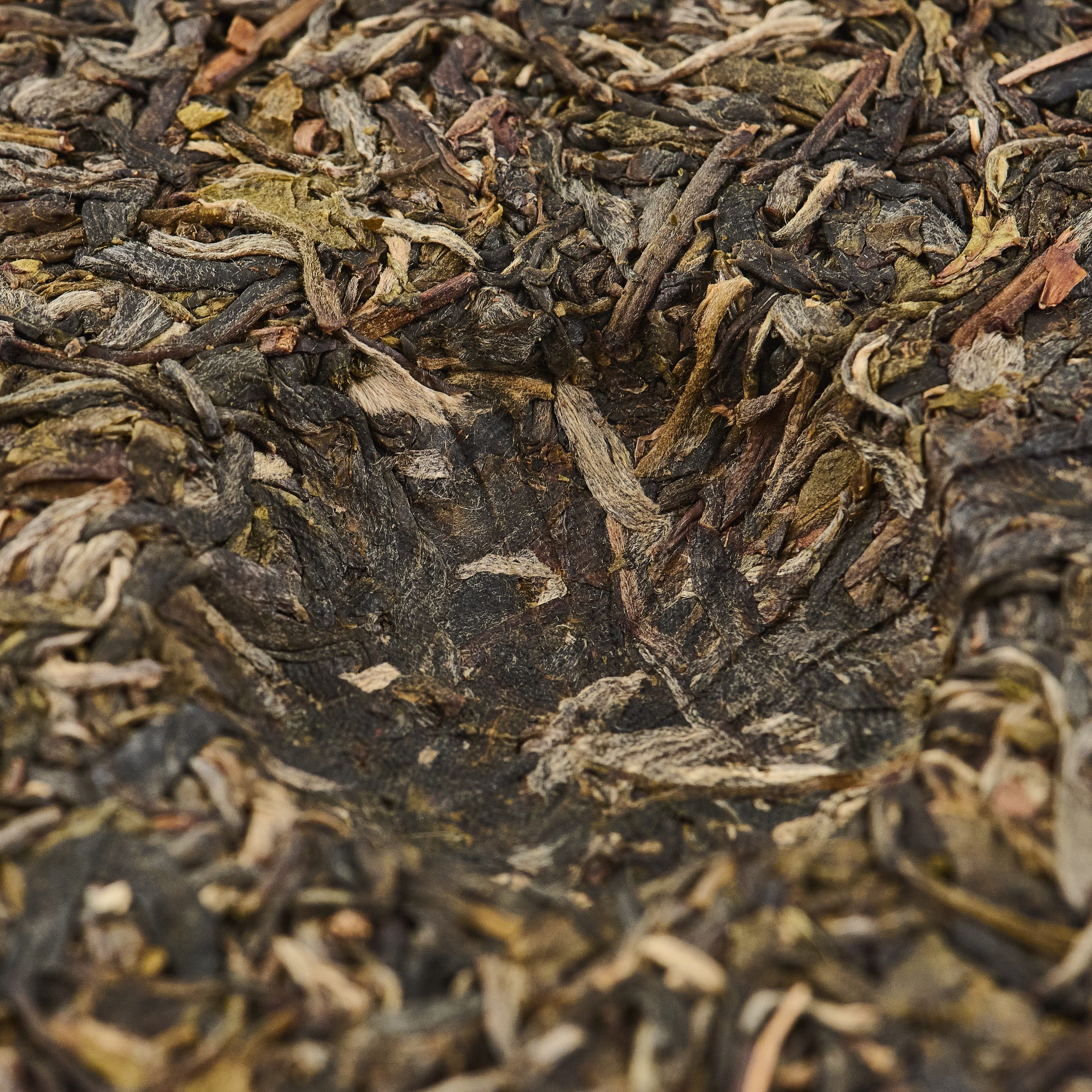
Traditionally for local shengs, the cake contains yellowish Huang Pian leaves. They are believed to give the tea additional sweetness and make its character more expressive.
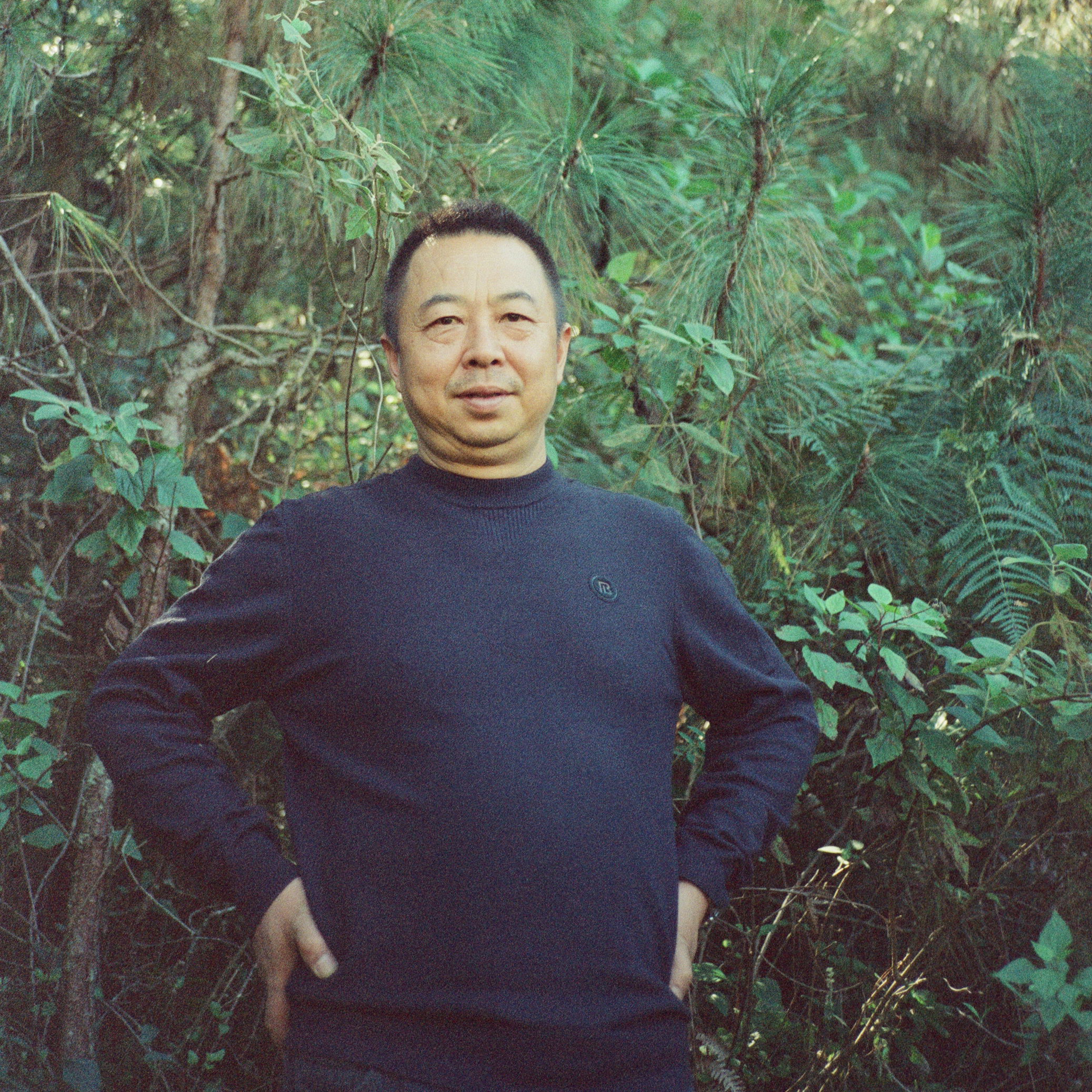
The harvesting of the tea leaves, wok-firing, and rolling are carried out entirely by hand under the constant supervision of Master Yuan. Everything begins with the crucial withering stage (Wei Diao), during which the master must evenly remove around 40% of the moisture from the leaves. This is followed by wok-firing using the special Chao Cha technique, which differs from the classic Sha Qing in its complexity. It is precisely this stage that allows the sheng puer to preserve the original natural flavor of the tea leaves while gaining the potential for storage and further aging. Afterward begins the process of hand-rolling the leaves (Rou Nian). In the production of many teas, this step is often performed to initiate fermentation within the leaves, but in the case of sheng puer it is done to make the leaves more compact and less susceptible to oxygen, light, foreign odors, and fluctuations in humidity during storage. After drying in the shade on woven mats, the leaves are steamed, compressed into cakes, then dried for 10–15 days and wrapped in rice paper.
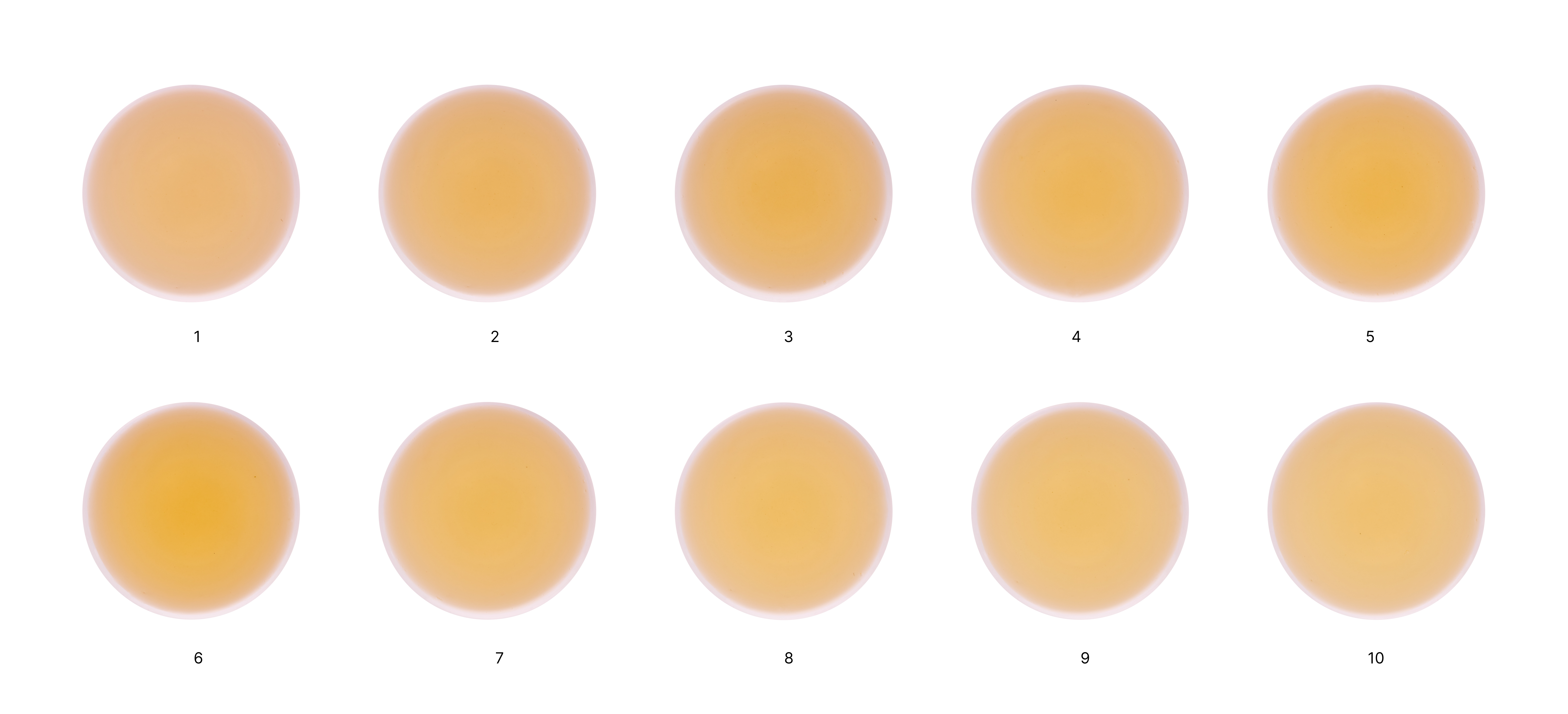
The aroma of the warmed leaves is berry-floral: vanilla, blackberry, incense, and mulberry. This sheng yields a dense, sweet, soft, and flavor-rich infusion. An empty cup surprises with the freshness of fragrant watermelon. The aftertaste unfolds through its distinctive “rhyme” (Hou Yun) — the tea’s unique personality, somewhat detached from the ordinary perception of the senses. With each cup, it leaves behind a floral trace and a cool fructose-like freshness.
This sheng has a soft and relaxing effect. Its tea state mentally transports you to the place where it was born — the banks of the Honghe River, where, in the shade of mulberry trees, you rest after the heat of a Yunnan spring day.
By infusions, water temperature 95-100°C
Proportion: 1 gram of tea / 20 ml of water